Buy peitz.eu ?
We are moving the project
peitz.eu .
Are you interested in purchasing the domain
peitz.eu ?
domain@kv-gmbh.de · 0541-91531010
Buy peitz.eu ?
How do you transform an object clause or a subject clause into a dependent clause (subordinate clause)?
To transform an object clause or a subject clause into a dependent clause, you can add a subordinating conjunction at the beginning of the clause. For example, changing "I know that he is coming" (object clause) to "I know when he is coming" (dependent clause). Another way is to remove the subject or object pronoun and change the verb form to make it dependent on the main clause. For instance, changing "She believes she can win" (subject clause) to "She believes she can win" (dependent clause). **
Is an infinitive clause a subordinate clause?
Yes, an infinitive clause is a type of subordinate clause. It functions as a single unit within a sentence and is dependent on the main clause for its meaning. Infinitive clauses typically begin with the word "to" followed by a verb, and they can serve various purposes such as expressing purpose, result, or obligation. **


Similar search terms for Clause
Top-Angebote
Products related to Clause:
-
Jla Home/Furniture & Decor Caymus Storage Bench Gray , GrayThe Caymus Storage Bench offers a chic simplicity designed by Martha Stewart. With natural-finished wood legs, the bench features a wide upholstered design in light gray woven polyester with piped accents. The 3.25 thick, foam-filled cushion also...299,99 $*Shipping: 0,00 $Secure redirect to the provider
-
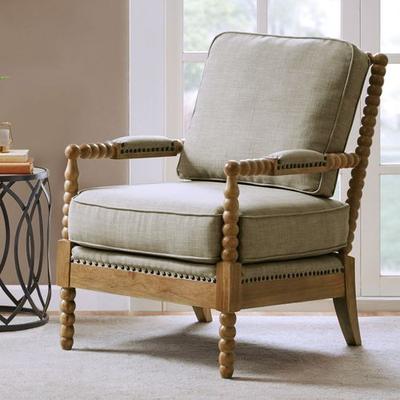
Jla Home/Furniture & Decor Donohue Accent Chair Gray , GraySplendid detailing charms the Donohue Accent Chair. Finished in a warm oak hue, the solid wood chair features unique spindle leg, arm, and back designs for a touch of classic whimsy. With gray polyester upholstery, bronze metal nailhead trim details...529,00 $*Shipping: 0,00 $Secure redirect to the provider
-
Jla Home/Furniture & Decor Isla Accent Bench Ivory , IvoryComplement a variety of spaces with the neutral hues and elegant design of the Isla Upholstered Accent Bench. Designed by Martha Stewart, the charming wood bench features a reclaimed natural finish, turned legs, cane inset sides, and a tufted ivory...399,00 $*Shipping: 0,00 $Secure redirect to the provider
-
Jla Home/Furniture & Decor Etienne Coffee Table Bronze , BronzeThe Etienne Coffee Table exudes a stately flair. With a chic rectangle shape, the table features a tempered glass top and a bronze metal framework with tapered legs and timeless accents. Overall, the glass coffee table measures 44 Wx24 Dx18.5 H and...359,00 $*Shipping: 50,26 $Secure redirect to the provider



-
What are main clause-subordinate clause constructions?
Main clause-subordinate clause constructions are sentences that consist of a main clause and one or more subordinate clauses. The main clause is a complete sentence that can stand alone, while the subordinate clause depends on the main clause for its meaning and cannot stand alone. Subordinate clauses often begin with subordinating conjunctions such as "because," "although," "if," or "when," and they provide additional information or context to the main clause. These constructions allow for more complex and nuanced sentence structures, and they are commonly used in both spoken and written language. **
-
Can an adverbial clause also be a subject clause or an object clause?
No, an adverbial clause cannot be a subject clause or an object clause. An adverbial clause functions as an adverb to modify a verb, adjective, or adverb in a sentence. Subject clauses and object clauses, on the other hand, serve as the subject or object of the main clause, respectively. Each type of clause has a specific grammatical function within a sentence. **
-
Is the main clause and subordinate clause correct?
To determine if the main clause and subordinate clause are correct, you need to ensure that they are grammatically sound and that they make sense when combined. The main clause should be able to stand alone as a complete sentence, while the subordinate clause provides additional information but cannot stand alone. Checking for subject-verb agreement and proper punctuation between the two clauses can help confirm their correctness. **
-
How do I recognize a relative clause, a conjunctional clause, and an interrogative clause?
A relative clause typically starts with a relative pronoun (such as who, whom, whose, which, or that) and provides more information about a noun in the main clause. A conjunctional clause, on the other hand, is introduced by a conjunction (such as and, but, or because) and connects two independent clauses. An interrogative clause is a type of clause that asks a question and is typically introduced by an interrogative pronoun (such as who, what, when, where, why, or how) or an interrogative adverb (such as how, when, or where). **

How can I recognize a relative clause, a conjunctional clause, and an interrogative clause?
A relative clause is a type of dependent clause that typically starts with a relative pronoun (such as who, whom, whose, which, or that) and provides additional information about a noun in the main clause. A conjunctional clause, on the other hand, is a dependent clause that functions as an adverb, adjective, or noun in a sentence and is connected to the main clause by a conjunction (such as because, although, if, when, etc.). An interrogative clause is a type of clause that asks a question and typically begins with a question word (such as who, what, where, when, why, or how) or with a helping verb followed by the subject. **
Is the accompanying clause in direct speech a main clause or a subordinate clause?
The accompanying clause in direct speech can be either a main clause or a subordinate clause, depending on its role in the sentence. If the clause is expressing a complete thought and can stand alone as a sentence, then it is a main clause. However, if the clause is dependent on the rest of the sentence for its meaning and cannot stand alone, then it is a subordinate clause. It's important to consider the context and structure of the sentence to determine the role of the accompanying clause in direct speech. **
Top-Angebote
Products related to Clause:
-
US Pride Furniture Contemporary Home Design Black Sofa BedThis Black comfortable, futon with microfiber cover is perfect for hanging out or catching some sleep. 2 position, easily converts from sitting to lounging to sleeping, it folds quickly and easily from a modern, stylish sofa to a full-size bed.444,99 $*Shipping: 0,00 $Secure redirect to the provider
-
US Pride Furniture Contemporary Home Design Grey Sofa BedThis Grey comfortable, futon with microfiber cover is perfect for hanging out or catching some sleep. 2 position, easily converts from sitting to lounging to sleeping, it folds quickly and easily from a modern, stylish sofa to a full-size bed.444,99 $*Shipping: 0,00 $Secure redirect to the provider
-
Jla Home/Furniture & Decor Caymus Storage Bench Gray , GrayThe Caymus Storage Bench offers a chic simplicity designed by Martha Stewart. With natural-finished wood legs, the bench features a wide upholstered design in light gray woven polyester with piped accents. The 3.25 thick, foam-filled cushion also...299,99 $*Shipping: 0,00 $Secure redirect to the provider
-
Jla Home/Furniture & Decor Donohue Accent Chair Gray , GraySplendid detailing charms the Donohue Accent Chair. Finished in a warm oak hue, the solid wood chair features unique spindle leg, arm, and back designs for a touch of classic whimsy. With gray polyester upholstery, bronze metal nailhead trim details...529,00 $*Shipping: 0,00 $Secure redirect to the provider
-
How do you transform an object clause or a subject clause into a dependent clause (subordinate clause)?
To transform an object clause or a subject clause into a dependent clause, you can add a subordinating conjunction at the beginning of the clause. For example, changing "I know that he is coming" (object clause) to "I know when he is coming" (dependent clause). Another way is to remove the subject or object pronoun and change the verb form to make it dependent on the main clause. For instance, changing "She believes she can win" (subject clause) to "She believes she can win" (dependent clause). **
-
Is an infinitive clause a subordinate clause?
Yes, an infinitive clause is a type of subordinate clause. It functions as a single unit within a sentence and is dependent on the main clause for its meaning. Infinitive clauses typically begin with the word "to" followed by a verb, and they can serve various purposes such as expressing purpose, result, or obligation. **
-
What are main clause-subordinate clause constructions?
Main clause-subordinate clause constructions are sentences that consist of a main clause and one or more subordinate clauses. The main clause is a complete sentence that can stand alone, while the subordinate clause depends on the main clause for its meaning and cannot stand alone. Subordinate clauses often begin with subordinating conjunctions such as "because," "although," "if," or "when," and they provide additional information or context to the main clause. These constructions allow for more complex and nuanced sentence structures, and they are commonly used in both spoken and written language. **
-
Can an adverbial clause also be a subject clause or an object clause?
No, an adverbial clause cannot be a subject clause or an object clause. An adverbial clause functions as an adverb to modify a verb, adjective, or adverb in a sentence. Subject clauses and object clauses, on the other hand, serve as the subject or object of the main clause, respectively. Each type of clause has a specific grammatical function within a sentence. **
Similar search terms for Clause
-
Jla Home/Furniture & Decor Isla Accent Bench Ivory , IvoryComplement a variety of spaces with the neutral hues and elegant design of the Isla Upholstered Accent Bench. Designed by Martha Stewart, the charming wood bench features a reclaimed natural finish, turned legs, cane inset sides, and a tufted ivory...399,00 $*Shipping: 0,00 $Secure redirect to the provider
-
Jla Home/Furniture & Decor Etienne Coffee Table Bronze , BronzeThe Etienne Coffee Table exudes a stately flair. With a chic rectangle shape, the table features a tempered glass top and a bronze metal framework with tapered legs and timeless accents. Overall, the glass coffee table measures 44 Wx24 Dx18.5 H and...359,00 $*Shipping: 50,26 $Secure redirect to the provider
-
Jla Home/Furniture & Decor Brandon Side Table , Regal WalnutBubbled legs charm the Brandon Side Table with an unexpected allure. The wood table features unique turned legs, a lower display shelf, and a table top with a built-in drawer. With a round metal pull, the drawer measures 17 Wx13 Dx2.5 H. Overall,...229,99 $*Shipping: 32,19 $Secure redirect to the provider
-
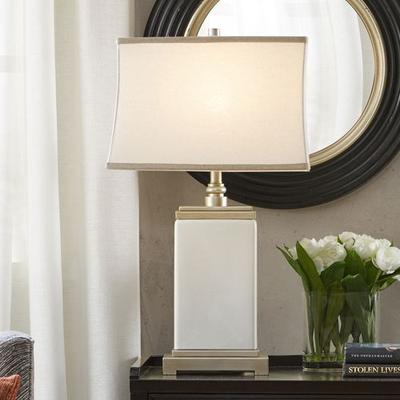
Jla Home/Furniture & Decor Colette Table Lamp Ivory , IvoryThe Colette Table Lamp embellishes a space with sleek, simplistic style. Filled with chic rectangle shapes, the lamp features an antique silver metal footed base, ivory ceramic center, and stepped metal topper. The off-white cotton rectangular shade...189,99 $*Shipping: 0,00 $Secure redirect to the provider
-
Is the main clause and subordinate clause correct?
To determine if the main clause and subordinate clause are correct, you need to ensure that they are grammatically sound and that they make sense when combined. The main clause should be able to stand alone as a complete sentence, while the subordinate clause provides additional information but cannot stand alone. Checking for subject-verb agreement and proper punctuation between the two clauses can help confirm their correctness. **
-
How do I recognize a relative clause, a conjunctional clause, and an interrogative clause?
A relative clause typically starts with a relative pronoun (such as who, whom, whose, which, or that) and provides more information about a noun in the main clause. A conjunctional clause, on the other hand, is introduced by a conjunction (such as and, but, or because) and connects two independent clauses. An interrogative clause is a type of clause that asks a question and is typically introduced by an interrogative pronoun (such as who, what, when, where, why, or how) or an interrogative adverb (such as how, when, or where). **
-
How can I recognize a relative clause, a conjunctional clause, and an interrogative clause?
A relative clause is a type of dependent clause that typically starts with a relative pronoun (such as who, whom, whose, which, or that) and provides additional information about a noun in the main clause. A conjunctional clause, on the other hand, is a dependent clause that functions as an adverb, adjective, or noun in a sentence and is connected to the main clause by a conjunction (such as because, although, if, when, etc.). An interrogative clause is a type of clause that asks a question and typically begins with a question word (such as who, what, where, when, why, or how) or with a helping verb followed by the subject. **
-
Is the accompanying clause in direct speech a main clause or a subordinate clause?
The accompanying clause in direct speech can be either a main clause or a subordinate clause, depending on its role in the sentence. If the clause is expressing a complete thought and can stand alone as a sentence, then it is a main clause. However, if the clause is dependent on the rest of the sentence for its meaning and cannot stand alone, then it is a subordinate clause. It's important to consider the context and structure of the sentence to determine the role of the accompanying clause in direct speech. **
* All prices are inclusive of VAT and, if applicable, plus shipping costs. The offer information is based on the details provided by the respective shop and is updated through automated processes. Real-time updates do not occur, so deviations can occur in individual cases. ** Note: Parts of this content were created by AI.